
Fifty-seven illegal television services shut down in five days, 321 websites identified for offering copyrighted content without permission, and more than €26 million in crypto transactions traced back to the people running them. That is the balance sheet of an operation Europol coordinated from 16 to 20 November at the Spanish National Police headquarters in Seville, where 30 law enforcement officers from 11 countries sat in the same room — Croatian officers among them.
Around 40 people took part in total. Alongside hosts Spain were Belgium, Bulgaria, Croatia, Greece, Ireland, Italy, the Netherlands, Portugal, Romania and the United States. Next to the police sat analysts from Europol, representatives of the European Union Intellectual Property Office, INTERPOL and the Audio-visual Anti-Piracy Alliance, plus people from Binance, Coinbase and Chainalysis. On paper it looks like a badly cast Ocean’s Eleven. In practice it was the only cast that could do the job.
Because this time there was no raid on servers. There was bookkeeping.
A change of strategy: kill the till, not the studio
For two decades anti-piracy enforcement followed one script: find the domain, take it down, issue a press release, congratulate yourself. The flaw is that a domain can be back online in 48 hours, at a different address, with the same content and the same people behind the screen. It is the equivalent of changing the lock after a burglary while the burglar keeps a copy of the key.
Europol approached it from the other end this time — the money. In its Tuesday statement the agency framed the shift almost as a textbook definition: removing an illegal service does not necessarily stop the people behind it, so investigators are increasingly focusing on the “financial infrastructure that allows these businesses to operate”. Translated out of EU-speak: it does not matter that the stream is down, it matters that nobody can collect a subscription any more.
It is the same logic American investigators used in Watergate and that Hollywood turned into the most quoted line in its screenwriting manual: follow the money. Except that in 2026 the money is not hidden in a safe but in a blockchain, where — with an irony that deserves its own screenplay — it is written down forever.
Pirate TV is not a hack, it is a subscription business
For a few euros a month, illegal IPTV services offer access to thousands of channels, live sport and films without paying rights holders. It sounds like a student trick, but the numbers say otherwise. The Audio-visual Anti-Piracy Alliance estimates that around 60 million people in Europe use unauthorised IPTV services, that legitimate providers lose roughly €4.83 billion a year, and that governments forgo another €1.08 billion in unpaid taxes.
For that business to function it needs something no pirate portal has in its name but every one of them has in the background: collection. A subscription is paid every month, from several countries, by people who do not want their name attached to the transaction. Card payments leave a trail at the bank and a chargeback as a counterpunch. Cash does not travel well across borders. Crypto does everything required — cheap, fast, and without an intermediary asking questions.
That makes crypto for pirates what cash was for a corner kiosk in the 1990s: not a proof of innocence, just a tool. The difference is that the kiosk never kept a public, global, immutable record of every single payment.
Why crypto is an archive, not a hiding place
During the five days in Seville, investigators followed suspicious transactions across multiple blockchains, looking for links between the services, the wallets receiving payments and the people controlling those wallets. Europol put it in one sentence that should be printed on every crypto marketing brochure: “But the use of cryptocurrency does not make criminals invisible.”
It is the most important line in the entire release and the least quoted. Crypto does not hide money; it translates money into a format anyone can read — most people simply cannot read it. A wallet address is not a name, but it is the beginning of a sentence that ends with one. The chain records the amount, the timestamp and the counterparty; what it does not record is identity. That is where exchanges step in, because every licensed exchange is the place where an anonymous address collides with a passport.
Chainalysis does exactly that: clustering addresses and recognising when the same wallet reappears across ten different services. Binance and Coinbase are not decoration in this story — they are the counters where crypto turns into euros and where the law requires identity checks. Europe’s Transfer of Funds Regulation, in force since 30 December 2024, obliges exchanges to attach sender and beneficiary data to transfers between platforms, and to verify identity for transfers from unhosted wallets above €1,000. In short: the very architecture pirates treated as an escape from oversight has become the cleanest evidence file police have ever been handed.
€26 million is not a seizure, it is a map
Precision matters here, because this is the nuance most news cycles lose. The figure of €26 million, roughly $28.5 million, is not confiscated money. It is not a freezing order, not a verdict, not an indictment. It is the value of transactions investigators were able to attribute to the payment network behind the services. At the time of publication nobody had been arrested, no domain had been seized under a court order, and transaction analysis was still ongoing.
In other words: the police did not kick down the door of the casino. They found out who keeps the books. In a criminal case, that is worth more than any server in a data centre in a third country.
Scale is best seen in hindsight. In November 2025, in Alicante, a week-long operation traced about $55 million in crypto linked to piracy and referred 25 services to crypto providers for disruption. A year later, the same room, a different city, a different team — and the same conclusion: what cannot be seized today can be proven tomorrow. Europol, in the meantime, froze more than €41 million in crypto in June 2026’s Operation Endgame and in March helped dismantle the SocksEscort proxy network, whose payment platform had received $5.7 million in crypto. The template is clear and repeats like a good risotto recipe.
The Croatian piece: five licences and one register
Croatia is not the lead character in this story, but it is in the frame — and that is the news. The national police were not guests at a press conference but one of eleven teams sitting over transactions for five days. For a country that until 2024 viewed crypto mostly through the anti-money-laundering lens, that is a quiet but real change of status.
The regulatory context fits. Since 1 July 2026, crypto services in Croatia and across the European Union may only be provided by licensed firms. Croatia’s financial regulator Hanfa now lists five entities authorised to provide crypto-asset services: Bitblock, Digital Assets, Electrocoin, IN Kapital and White Tech. Five domestic addresses, each with an obligation to verify client identity, retain records and report suspicious transactions, backed by fines of up to €5 million for operating without approval.
For an investigation like the one that ended in Seville, that matters twice over. First, every licensed provider is a checkpoint: the place where a blockchain address meets a person. Second, the European register of providers approved under MiCA holds hundreds of names, each carrying the same obligation — which means a trail starting at a pirate portal in a third country is almost impossible to break without passing through a counter with a camera and a passport.
The tax layer sits on top. Croatia’s regime is comparatively gentle: capital gains on crypto are exempt if more than two years pass between acquisition and sale, and 12% income tax applies inside that window. Since 2026 there is also DAC8, the EU obligation for platforms to report crypto transactions to tax authorities. For a legitimate investor that means paperwork; for anyone laundering money through IPTV subscriptions it means one more layer of paper left behind.
A crypto nation with thin infrastructure
The paradox of the domestic scene is that demand outruns infrastructure. According to the 2026 Cryptonomy Retail Index, 15% of Croatian internet users aged 16 to 64 own some form of crypto — 20th in the world and eighth in the European Union. The ECB’s 2024 SPACE survey found 13%, the 2023 Eurobarometer found 16% and ranked Croatia second in the EU behind Slovenia. Triple-A estimates far lower, around 1.3% of the population, which is the best illustration that these figures are a matter of methodology rather than reality.
Interest is clearest among the young. A September 2026 survey by the Karika agency for the Croatian Banking Association, on a representative sample of 503 people aged 18 to 35, found that 22% invest in crypto — more than in stocks, ETFs, funds or gold. Crypto is, in other words, the first investment choice of a generation. That sounds like a compliment until one remembers this is a generation whose first encounter with markets came in a year when Bitcoin fell more than 50% from its all-time high.
Volumes at domestic providers tell the same story: €436.6 million in 2024 and €472.9 million in the first eleven months of 2025 across 14 active firms. Yet everyday infrastructure stays thin — according to BTC Map, roughly ten merchants in Croatia accept crypto and there are eight registered crypto ATMs. A national team that looks excellent on the scoresheet but has no pitch to train on.
That is precisely why most domestic flow ends up on foreign exchanges and in self-custody wallets. It is both good and bad news: good because Croatian users are not hostages to local liquidity, bad because any trail the national police want to follow usually continues beyond their jurisdiction — which is why the room in Seville mattered more than any domestic register.
The same rails, the other side of the wallet
While Europol was counting euros in pirate wallets, the Croatian public got a reminder that payment infrastructure has a second face. CorvusPay, a Croatian online payments platform, confirmed a security incident in which attackers gained unauthorised access to part of its systems and stole email addresses, IBANs, transaction amounts and dates, currencies and merchant names. The breach was detected on 17 November and disclosed on 21 November; the affected service was CorvusPayByIBAN, while card data was not compromised. The company notified the data protection agency AZOP, the interior ministry, partner banks and users.
The number that gives it weight comes from the national CERT: 1,203 cyber incidents were recorded in Croatia by the end of September. A third involved data theft, a quarter unsolicited messages, a fifth other forms of financial fraud. And on Friday, police in Osijek-Baranja county reported that an unknown perpetrator had defrauded a 75-year-old man and a 73-year-old woman of more than €102,000 between 11 September and 5 November through fake crypto investments.
Three stories, one thread: money without friction is also money without guardrails. The same properties that let pirates collect subscriptions from ten countries let a fraudster empty four decades of savings in four phone calls. The only difference is who holds the ledger, and who reads it.
What comes next: national probes and a bill with interest
Europol said the gathered information will support national investigations — identifying suspects, disrupting illegal services and tracing assets linked to criminal activity. That is the language Brussels uses for something very concrete: the next phase is not technical but legal, and it lasts for years.
How many years is best illustrated by a case with nothing to do with IPTV and a perfect punchline. German prosecutors last week offered the alleged operator of the defunct piracy site Movie2K a deal to end his money-laundering and tax-evasion trial if he hands over 40,000 bitcoin. He is believed to still hold around 56,000, bought with proceeds from a site shut down in 2013. Thirteen years later the bill arrived with interest — in the very currency he used to disappear.
That is a lesson that does not fit the romantic version of crypto as an exit from the system. In reality every payment leaves a record, every record has an owner, and every owner has an address. The pirates thought they were buying anonymity. They bought evidence, with a delay attached.
Market context
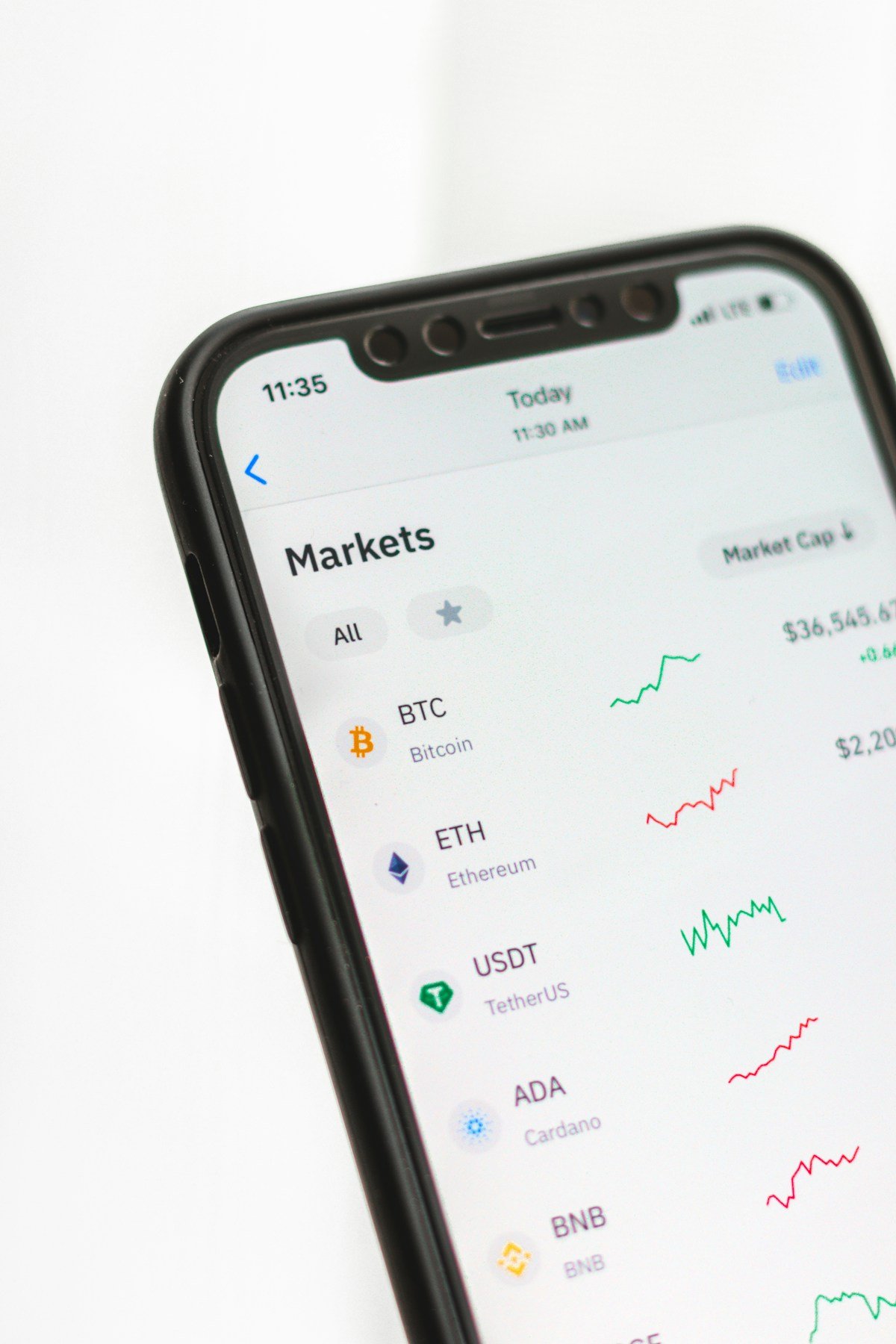
The news landed while crypto was grinding through one of its duller but more painful stretches. Bitcoin traded around $58,971 in the morning of 25 November, down 1.63% on the day and 8.79% on the week, some 53.2% below its all-time high. Ethereum stood at $1,641.72, down 2.46% in 24 hours. Total market capitalisation of the top 500 names was $2.02 trillion on $69.9 billion of daily volume, with Bitcoin dominance at 58.54%. Solana traded at $67.56, BNB at $539.82 and XRP at $0.9144. Overall market cap fell 4.82% in 24 hours.
In that environment, stories about traced millions sound almost nostalgic — a reminder that in crypto, whatever the price, the largest sums are always booked somewhere.
Disclaimer: this is not investment advice. The crypto market is highly volatile and the figures above reflect the situation at the time of writing (25 November 2026, 10:00 UTC).