
Croatia’s Ministry of Finance, the Croatian National Bank and the financial regulator Hanfa presented a financial literacy portal in Zagreb on Monday, complete with a self-assessment tool for digital financial literacy. The portal goes live next year. Two days later, the Bjelovar-Bilogora police confirmed that a 60-year-old woman from the area had reported an investment fraud worth more than 61,000 euros: four months of payments, guided by strangers over the phone, promising returns on oil derivatives, gold and cryptocurrencies.
Two stories, one subject, two different time zones. The institutions are building a knowledge infrastructure for 2027 while the fraud industry is running at full capacity in November 2026. The fire-safety system is being installed in a building where the second floor is already burning — and the instruction manual arrives by post next year.
November as a damage report
According to the complaint, the woman from the Bjelovar area saw a video on a social network advertising investment in oil derivatives, gold and crypto. Several unknown people then contacted her from different phone numbers. Payments went in instalments. When she asked to withdraw the supposed profit, the condition became fresh money: commissions, taxes, account activation fees. The classic final act, in which the victim buys a ticket for a film that was never shot.
She is not an isolated case. In the same month:
- Međimurje, 12 November: a 77-year-old man reported a fraud worth just under 9,000 euros. He found an ad about crypto investing on a social network, was contacted by a “financial adviser”, paid a few hundred euros to start, then repeatedly bought crypto vouchers and made further transfers from a digital wallet.
- Poreč area, 16 November: a 79-year-old man lost “several tens of thousands of euros”. Contact began by email, payments went to crypto accounts via QR codes sent to him, and communication stopped the moment a withdrawal was due.
- Dalmatia, early November: 5,000 euros gone after a single phone call. One call, one payment, one empty app full of green numbers.
- “Money recovery”, 14 November: another case in which a victim of an earlier fraud was robbed a second time, this time by someone promising to return the lost funds. The same pattern previously produced 31,300 euros of additional damage in a Slavonian case.
The common denominator is not geography or amount, but age and channel. The victims are between 60 and 79, the entry point is almost always a social media ad, and the exit is a crypto payment that nobody can reverse. Croatian police have repeated the same list of advice for years, not for lack of imagination, but because the script does not change — only the logos on the fake platforms do.
Anatomy of a play in four acts
Act one is the ad: a video with a familiar face, a headline along the lines of “Croatian pensioners found a loophole in the system”, and a short contact form. Act two is trust: a person with a name, a title and polite working hours calls back. Act three is the fake platform — clean, chart-heavy, with a balance that only goes up, built for the sole purpose of convincing the victim that the money is working. Act four is the collection of “taxes” and “commissions” for a withdrawal that never arrives.
There is a fifth act that rarely shows up in statistics: the return to the scene of the crime. Once the victim realises what happened, “recovery specialists”, “legal teams” and “blockchain forensic experts” appear, demanding an advance fee to retrieve the money. It is an industry with its own price list and its own call centres, and it counts on one human trait stronger than fear — hope.
Vouchers, kiosks and cash: a tape with no recording
One detail from Međimurje deserves separate attention: the 77-year-old bought crypto with vouchers. A crypto voucher from a newsstand is, from a fraudster’s point of view, an ideal instrument. It is paid for in cash, it leaves no bank trail that a bank could block, and the victim buys it personally, with their own hand, in their own name.
Croatia formalised that channel in October, when Tisak (Fortenova Group, roughly 800 retail outlets) introduced crypto vouchers with a QR code and cash payout at the counter, working with partners holding a Hanfa licence. Legally clean. Practically, one more door into a system where cash turns into a token without anyone asking about intent. Cash payments above 10,000 euros trigger a report to the anti-money-laundering office, but a 9,000-euro fraud sits comfortably under that threshold. The amount is not accidental; the amount is engineered.
The regional picture confirms the pattern. A Chainalysis report published on 18 November found that Eastern Europe’s crypto economy shrank 7.9 percent to 642.1 billion dollars, the weakest performance of any region against a global decline of 1.6 percent. The only category that grew was cash-heavy — ATMs and peer-to-peer exchanges, up 1.5 percent, against a global drop of 25.6 percent. Croatia is not the volume leader in that mosaic, but it fits the structure: few ATMs (BTC Map counted eight in October), around a dozen merchants accepting crypto, and a very lively cash-and-kiosk channel.
What MiCA covers, and what stays outside the fence
Croatia has been under the full MiCA regime since 1 July 2026. By August, Hanfa had issued five domestic crypto licences; the register includes Electrocoin, Bitblock, Digital Assets/Bitcoin Store, White Tech and one more provider, while IN Kapital awaits entry in the court register. Fines reach five million euros, and in July Hanfa banned Fima Plus from providing crypto services and ordered the return of client assets. All of that works — for companies that want to operate legally.
The problem is that a fraud is not a service provider. A fake platform has no licence to revoke, no registered office in Zagreb, no director with a tax number. It has ad inventory, a VoIP number and a wallet. MiCA refurbished the dressing rooms; it did not put stewards in the stands.
Which is why the second, technical layer that opened this week matters more. Researchers at Report URI revealed on 16 November a campaign in which malicious code was injected into the websites of 178 organisations, including the BBC, CNN, Zoom, IKEA, HSBC, Salesforce, Equifax, Fox News, Alaska Airlines and GitLab — 188 compromised scripts in total. The attackers did not break into each company separately. They exploited a flaw in Optimizely, a tool used to test page layouts. One open window in a shared tool, 178 houses with an uninvited guest.
Part of the code was written to harvest card data and capture screenshots, part targeted outdated versions of iOS and iPadOS, and part waited for a wallet address to be copied — then swapped it for one controlled by the attackers. By 16 November, roughly 7,040 dollars in crypto had landed in linked wallets. Pocket change next to the billions lost in the Binance heist, but a far more important detail: this attack did not require the victim to be gullible, only fast enough not to check the first and last six characters of an address. Fraud without a call centre, without pensioner stereotypes and without a single word of persuasion.
49 out of 100, and a doorman arriving in 2027
The numbers presented on Monday say more than any campaign. Overall financial literacy in Croatia was scored at 62 percent in 2026, up from 57 percent in 2015 — five percentage points in eleven years. On the digital component, according to the OECD’s 2023 survey, Croatia scored 49 out of 100 against an OECD average of 55. State secretary Matej Bule put it without decoration: in digital financial literacy, Croatia sits below the average.
The plan on paper is clear: a portal with a self-assessment tool, folded into a new strategic framework for financial literacy running from 2027 to 2032. Deputy governor Bojan Fras noted that the central bank had more than 30,000 participants in its education programmes last year, while Hanfa board member Martina Verić observed that digitalisation opens access to markets and, with it, room for fraud. Toni Milun, a national ambassador for financial literacy, reduced the matter to a sentence about a single click.
What remains unsaid is the audience question. A digital self-assessment tool will be used by people who already know how to search, read and trust institutions. The November victim profile is different: people who opened a social network, clicked a video and answered a phone. For them the doorman arrives a year after the burglary, with instructions posted on the very portal they would need the skills to find.
None of that makes the project pointless. It makes the portal insufficient as an answer to a fraud wave. The answer is immediate friction: slower payouts, recipient verification, blocks on first transfers to new accounts, a mandatory pause on crypto voucher purchases above a set amount, and a public register of verified providers that opens in two seconds rather than two clicks through a PDF. In a world where 61,000 euros moves over four months, a year is an era — long enough for a new strategic framework, a new campaign, and a few hundred more people whose names become a number in the fraud column.
Market context
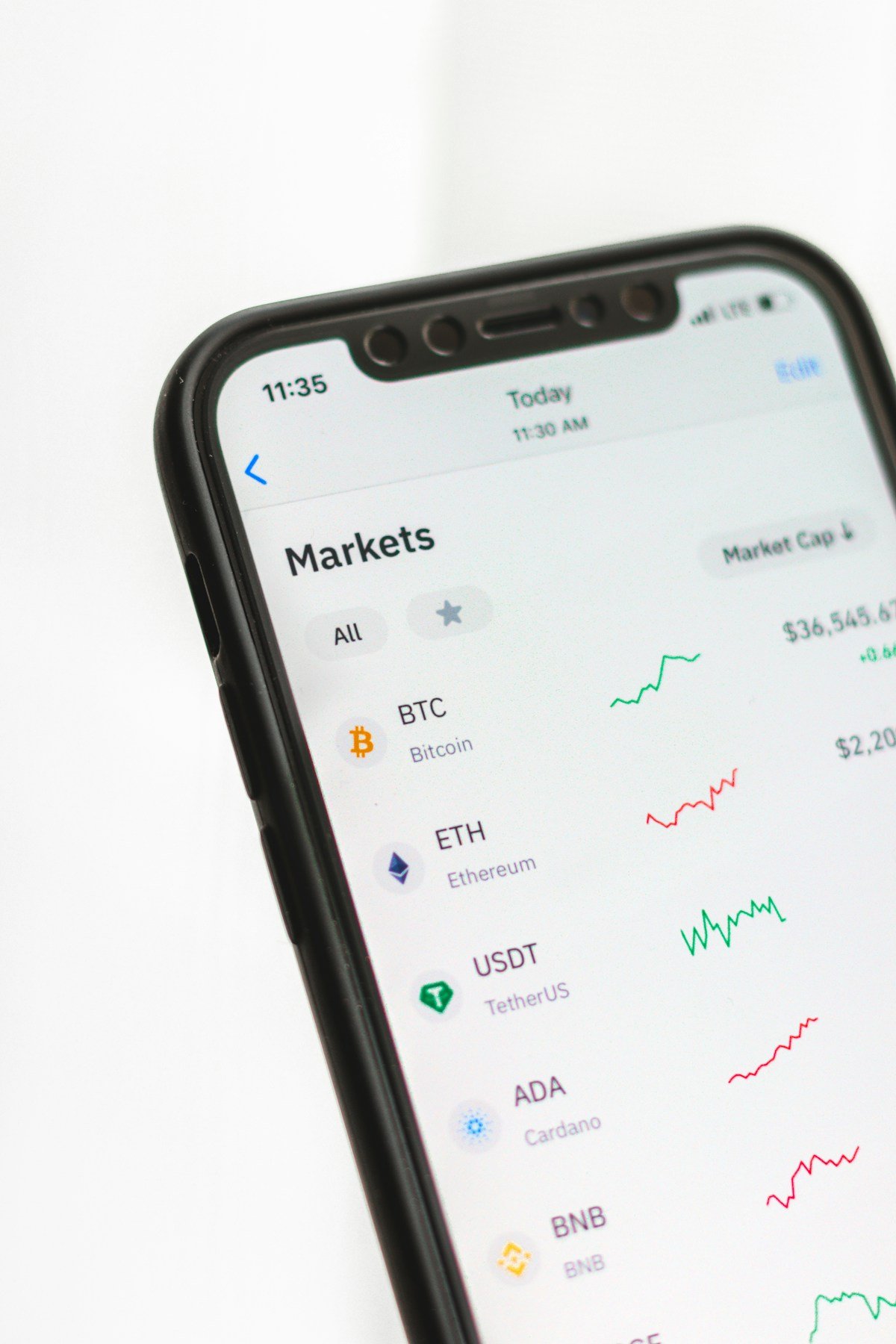
The irony is thick: the crypto market in November is far from the euphoria in which get-rich-quick stories are born. Bitcoin traded around 64,562 dollars at 10:00 UTC on Wednesday, up 0.4 percent on the day. Ethereum stood at 1,811 dollars (+0.1 percent), Solana at 75.09 (+3.4 percent), BNB at 591.21 and XRP at 0.9986 (+4.2 percent). Total market capitalisation is 2.19 trillion dollars across 21,562 active cryptocurrencies.
In other words, the fake platforms of November 2026 are selling a growth story on a market that is flat or falling. That is not a bug in the business model. It is the business model: the revenue does not come from the market, it comes from the deposit.
Market data (10:00 UTC)
- Bitcoin (BTC): $64,562 | 24h: +0.41% | MCap: $1.30T
- Ethereum (ETH): $1,811.36 | 24h: +0.09% | MCap: $221.4B
- Solana (SOL): $75.09 | 24h: +3.45% | MCap: $44.4B
- BNB: $591.21 | 24h: +0.21% | MCap: $77.7B
- XRP: $0.9986 | 24h: +4.17% | MCap: $63.4B
- Total market cap: $2.19T | active cryptocurrencies: 21,562
Related
- Bitcoin at the newsstand: Tisak rolls out cash crypto vouchers across 800 kiosks
- Croatia issues five crypto licences: from wild west to official register
- A shadow exchange with better customer service: 1,203 cyber incidents
This is not investment advice. Price data from CoinGecko at 10:00 UTC. Fraud reports in Croatia go to the police on 192 and to webheroj.hr; platform checks belong in Hanfa’s register of crypto-asset service providers and in ESMA’s CASP register.