
Croatia’s crypto scene has shrunk to five names. As of September 23, 2026, the register of companies authorized to provide crypto-asset services at the Croatian Financial Services Supervisory Agency (Hanfa) lists exactly five firms — Bitblock, Digital Assets, Electrocoin, IN Kapital and White Tech. After the transitional period for alignment with the EU’s MiCA regulation expired on July 1, only holders of a crypto licence may provide crypto services, turning a market that once counted thousands of players into a closed club with five seats. By the rules of the film Highlander, only a handful remain.
The figure reads like a reality-show finale rather than a financial-sector roster. During the transitional period, 17 companies were entered in Hanfa’s register of virtual asset service providers (VASPs). Five of them launched the licensing process in time and obtained a crypto licence, while the rest, by the letter of the law, ceased to be allowed to provide crypto services as of July 1. Comparing it to a casting call is generous: this is closer to a Champions League final with five teams playing, while the rest of the league was handed a dismissal with no right of appeal.
The five winners: who holds a crypto licence
The first through the door was Electrocoin, a Zagreb-based company founded back in 2014, which received Croatia’s first MiCA licence from Hanfa on April 10, 2026. It is a so-called CASP licence — authorization to operate as a crypto-asset service provider. CEO Nikola Škorić explained at the time that the company was thereby becoming an equal part of the financial industry, under full Hanfa supervision, and that the point of the regulation is transparency, consumer protection and a signal that these are safe exchanges operating by the rules. Until 2024, oversight was largely limited to anti-money-laundering rules, while MiCA introduced full regulatory treatment.
The second licence holder is White Tech, a Zagreb project backed by Volodimir Nosov, founder of the WhiteBIT crypto exchange. Hanfa issued the approval on April 23, 2026. Through the London-based company Datatech Investments, Nosov holds 80 percent, while 20 percent belongs to Ivica Pirić, a former footballer and Ukraine’s honorary consul in Croatia. The company has its headquarters in Split and an office in Zagreb, and the parent platform WhiteBIT counts more than 5.5 million users. Its roster of sports partnerships includes one with FC Barcelona, which in the domestic context produced a string of jokes about a footballing link between Split and the Catalan giant.
The third approval went to Split-based Digital Assets on June 1, 2026, extending the regulated framework to Dalmatia as well. The fourth name on the list is Bitblock, the company behind the Kriptomat.hr brand and a network of physical devices for buying and selling crypto assets for cash, spread across locations throughout Croatia. Under that model, purchased assets do not stay with the service provider but go directly into the user’s own wallet — a key distinction for part of the market. The list is completed by IN Kapital, a Zagreb exchange office that obtained its approval in early July and, after registering its activity in the Commercial Court register, completed its entry in Hanfa’s register as well.
An autobahn without limits became a road lined with cameras
MiCA, Regulation (EU) 2023/1114 on markets in crypto-assets, entered into force in June 2024, but an 18-month transitional period gave existing players room to adapt. That period ended on July 1, 2026, simultaneously across the entire European Union. Until then, each member state had its own rules, and certain companies nimbly slipped through those differences. The comparison to a German autobahn without speed limits is not a jab at the Germans but a fairly accurate description: the market ran fast for years, but with no guardrails at all.
The picture is different now. The basic logic of MiCA is simple: if one sells or trades crypto assets in the EU, a licence is required. But the real trick is the so-called passport — a licence obtained in one member state is valid in all 27, meaning a market of roughly 450 million people. A Croatian CASP thereby does not merely gain permission to operate in Zagreb and Split, but a ticket to the whole of Europe.
The bar, however, has been set extremely high. According to the ESMA register, around 177 full MiCA authorizations are in force across the EU, whereas before the new regulation there were more than 3,000 licensed providers under the old regime. In other words, roughly 95 percent of the old market simply evaporated. In Poland, where around a thousand once operated, there are now none; a similar fate befell Italy, Romania and Estonia, once the strongest in the sector. Like Thanos’s snap, but in a suit and with a regulator’s stamp.
Frankfurt sharpens its sword: the ECB wants to ban stablecoin interest
While the Croatian scene is still getting used to the new five-member club, a message from Frankfurt says that even the current rules are not strict enough. On September 22, 2026, the European Central Bank and the EU’s national central banks sent a 57-page response to the European Commission’s consultation on the MiCA review. In it, they seek to extend the existing ban on paying interest on stablecoins to indirect forms of return as well — crypto lending, borrowing, staking and similar products.
The central banks’ argument is that electronic money is meant for payment, not as a means of saving, and that interest on stablecoins would blur the line between e-money and bank deposits, circumvent existing restrictions and distort fair competition in the market. Interestingly, the same debate in the United States sits at the heart of the fight over the Clarity Act, which failed in the Senate in July, when banks warned that platforms could offer interest resembling deposits.
Alongside the yield ban, the central banks propose changing reserve rules. Instead of the current requirement that stablecoin issuers hold between 30 and 60 percent of reserves in bank deposits, they want rules based on how quickly reserves can be converted into cash — for significant stablecoins, at least 40 percent within one day and 60 percent within five working days. The logic is clear: large stablecoin deposits are not a stable source of bank funding if an issuer can withdraw them overnight.
What it means for the domestic scene
The consequences for the Croatian market cut two ways. On the one hand, five licensed names mean fewer choices and greater concentration, which any competitive spirit experiences as a blow. On the other hand, those very names now carry the stamp of supervision, an obligation to protect users, manage risks and handle complaints, while at the same time opening a path to the entire European market. Non-compliant exchanges in the EU are recording user declines of up to 40 percent, while licensed players are seeing institutional deposits rise by around 55 percent. The signal is rather unambiguous.
The context adds weight. The case of Vuk Vuković, a Croatian economist arrested in the US on suspicion of securities fraud, showed how central the question of verifying who stands behind an offer has become. Hanfa therefore continues to call for caution, recommends checking the name of the legal entity in its registers and asks that suspicious entities be reported to info@hanfa.hr. On top of that, from 2026 the Tax Administration is introducing oversight of crypto transactions and data exchange with other EU states, so the era of complete anonymity in the domestic market is drawing to a close.
If a decade ago the crypto scene in Croatia looked like the Wild West, it now increasingly resembles an orderly waiting room where proper documents are requested at the counter. There is less adventure, but also less chance that someone is left without everything while answering to no one.
The market, slightly in the red
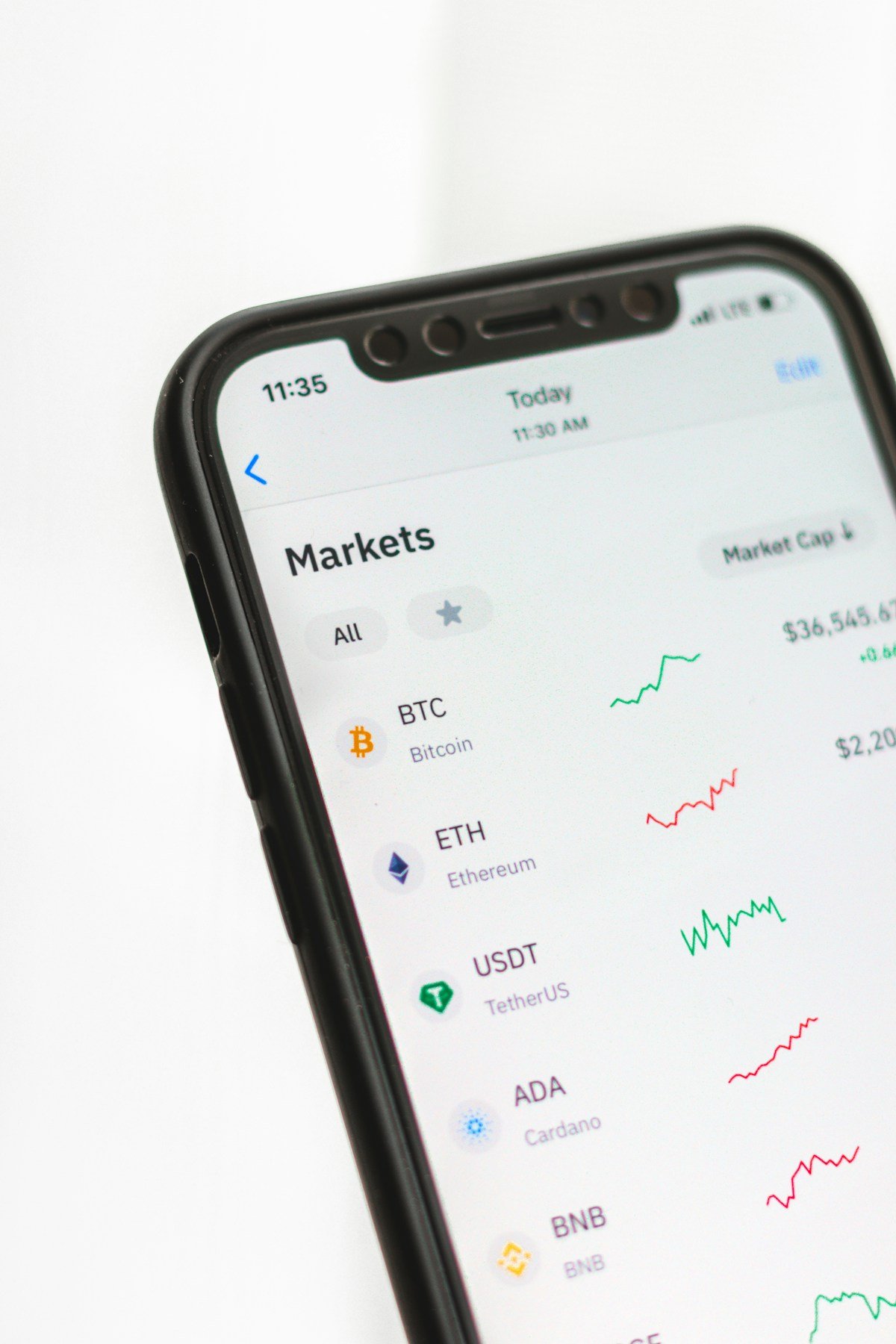
The macro picture remains calm, but not cheerful. On Wednesday morning, Bitcoin traded around $85,830, down 0.44 percent on the day, while Ethereum fell to $2,732.92, down 0.60 percent. Solana stood at $117.35, virtually unchanged, while XRP was among the few brighter spots with a gain of 3.52 percent to $1.59. Binance Coin held at $782.57, down 0.63 percent. Regulation is advancing, and prices — as is their habit — carry on a separate conversation.
This article is for informational purposes only and does not constitute investment advice. Investing in crypto assets carries the risk of losing funds, and licensing and supervisory conditions are subject to change. Price data reflects the situation on September 23, 2026.