
US authorities have arrested Vuk Vuković, a 38-year-old Croatian economist, founder of Oraclum Capital LLC and chief executive and investment officer of the ORCA BASON Fund, on suspicion of securities fraud and wire fraud. The news was first announced by Croatia’s financial supervisory agency, Hanfa, citing the US Attorney’s Office for the Southern District of New York. The indictment charges Vuković — nicknamed the “Wolf of Wall Street” by local media — on two counts, each carrying a maximum sentence of up to 20 years in prison.
The charge: reports that looked better than reality
The case, laid out in a criminal complaint filed by FBI Special Agent Babatunde Adediran, is fairly specific: investors were sent false monthly reports in which the fund’s returns were shown as higher than they actually were. At least one prospective investor also received falsified brokerage documents, in which the fund’s net asset value and returns were dressed up above their real figures.
If that sounds like a familiar pattern from the world of crypto — promised returns, pretty charts, a convincing authority figure — it is. The only difference is that this was a Wall Street fund, not a token with nothing behind it. The mechanics stayed identical: trust is built on paper, and verification arrives too late.
The turning point: a signature that did not exist
The break came in June 2025. A prospective investor asked the fund’s administrator for a direct verification of the data. Instead of a reply from the administrator, a document arrived from Oraclum’s investor relations address carrying a forged signature from the “administrator’s investor relations team.” Those papers showed a 2024 return of 38.44 percent and assets of $18.45 million, while the actual broker statements showed a far more modest 16.39 percent and $12.77 million.
The gap for 2023 was even worse: the prospective investor was shown a gain of 19.05 percent, while the fund had in reality posted a heavy loss of 22.46 percent. When the investor contacted the administrator directly to ask whether the paperwork was authentic, the answer was no. Vuković later explained it as a “mistake and an automatic reply from the back office” — an explanation that reads well in a press release but does not hold up once twenty or so reports are compared side by side.
The comparison of some twenty 2023 reports showed that clients were routinely shown higher returns than the real ones, sometimes by more than 10 percentage points. It is as if a football team announced a win every week while the league recorded a loss — except that here it was not the table being fixed, but the impression.
A Manhattan search and an admission
The investigation intensified when the US Securities and Exchange Commission (SEC) joined the case. Law enforcement officers searched premises in Manhattan used by Vuković and Oraclum on September 9. According to the complaint, Vuković admitted to investigators that the broker statements sent to the prospective investor were false and did not accurately show the fund’s position or returns. He denied, however, sending them personally, claiming that only one other person besides him had access to the email account in question.
The explanation about a separate brokerage account that the administrator had not had access to until recently did not satisfy investigators — a review of that account, the complaint states, still does not explain the holes in the calculations. Vuković was released to mount his defence at liberty, he may not leave New York, and the trial is scheduled for November. He is presumed innocent until proven guilty in court.
A dream fund and an election-forecasting model
Oraclum Capital launched the ORCA BASON Fund in early 2023. The strategy was built on trading weekly equity index options, and the key selling point was the so-called BASON method — a network-analysis and prediction model that Vuković originally developed to forecast election results before pivoting it to financial markets. An economics doctorate from Oxford was part of the pitch, and by late 2024 the fund had, according to the firm’s claims, grown to roughly $23 million to $25 million in assets, with gross returns above 50 percent.
The combination of Oxford, an algorithm and “returns above 50 percent” reads like the trailer for a film in which a genius cracks the market overnight. Films of that genre, however, tend to end in a courtroom — and this one set off down the same path.
Hanfa had been raising red flags for two years
Croatia’s regulator did not wait for America. Back on July 11, 2025, Hanfa issued a ruling ordering a halt to, and banning, the further unauthorised provision of investment services linked to investments in the ORCA BASON Fund, as well as the unauthorised holding of investor funds. In December of that year it banned Oraclum Capital from trading on Croatian territory, including the distribution and promotion of the fund’s units. The core problem was the access model: investment reached small investors through a cooperative called Glas poduzetnika 2.0, even though complex funds such as ORCA BASON are permitted in Croatia only to professional investors.
Hanfa ordered the cooperative to stop providing investment services to ineligible small investors and to return the collected funds through lawful channels. A ruling of June 1, 2026 established that the firm had complied with the orders, and Hanfa confirmed that 104 identified indirect small investors in Croatia received a total of 4.8 million euros back. Anamarija Staničić, deputy president of Hanfa’s management board, urged those who may have invested directly in the US fund to contact Hanfa, since the total number of investors from Croatia cannot be determined.
Among those who invested directly is IT expert Lucijan Carić, who publicly assessed that liquidation of the fund and a valuation of its assets is the most likely scenario. Establishing the true returns and assets is precisely what the US investigation is now about.
The same song as in crypto — just in a suit
The story has a clear crypto ring to it, and not by accident. MiCA, the EU regulation on markets in crypto-assets, has applied in full in Croatia since July 1, 2026: crypto service providers must now hold a Hanfa licence and operate under clearer rules. The regulator’s message is almost identical to the one from the ORCA BASON case — check who is behind an offer, and whether they are authorised to make it at all.
After the arrest, Hanfa issued a warning that applies equally to crypto and to classic investment products: if something is presented or promised as an extremely large return in a very short time, extra caution is warranted. Three general rules apply: first, check whether the person or firm is authorised and listed in Hanfa’s registers; second, understand the product, its risks and its expected return; third, do not trust promises that sound too good. In a world where a new token with a “guaranteed” payout appears every few weeks, those three rules are worth more than any marketing.
A market in the red, and caution at a price
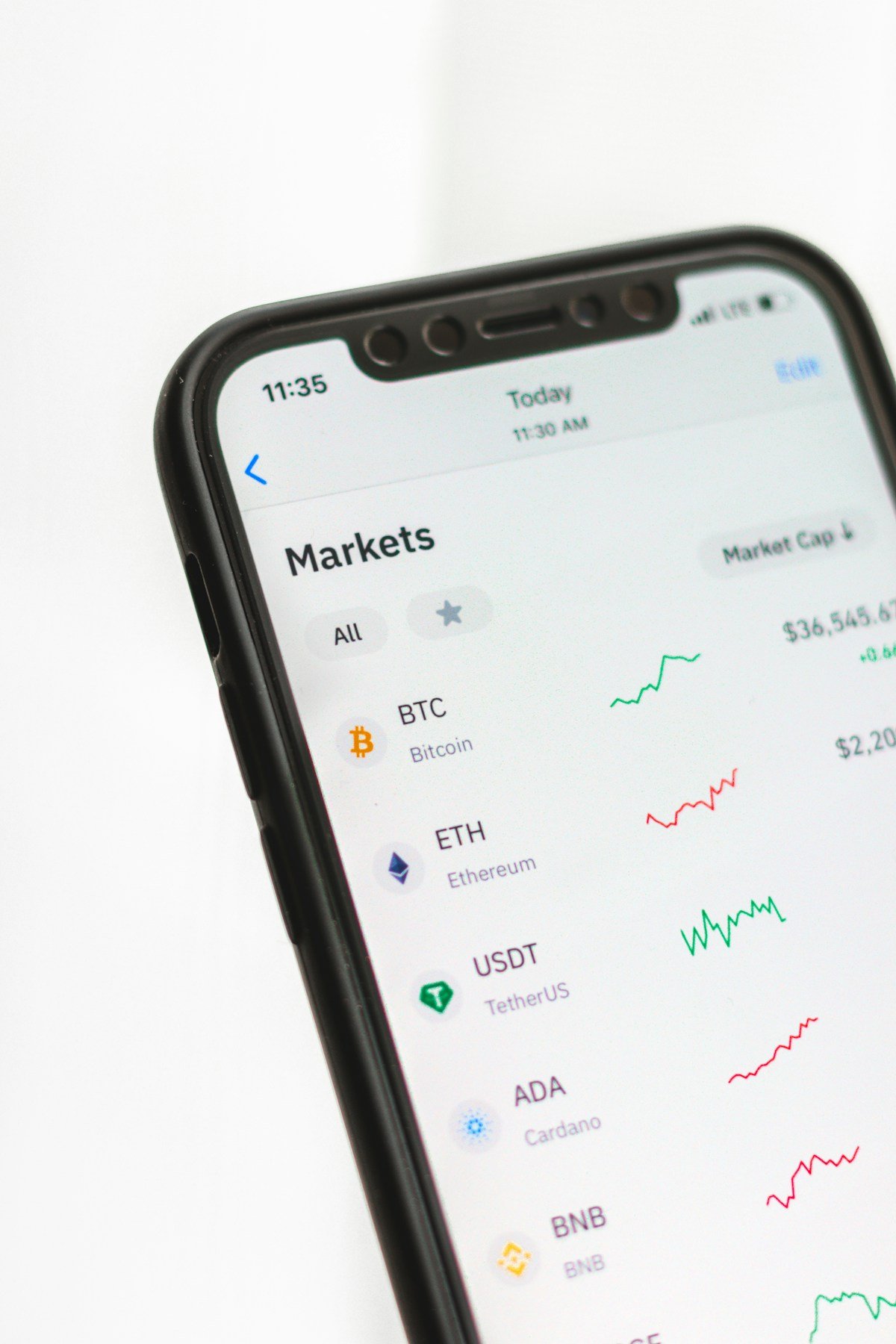
The backdrop does not help. Bitcoin was trading around $75,930 on Wednesday morning, down 1.35 percent on the day, while Ethereum fell to $2,404, down 2.83 percent. When markets turn red, the hunt for fast money makes people more susceptible to promises. History has shown the same pattern many times: in the golden years everyone is a genius, and in the corrections it becomes clear who actually knew what they were doing.
As with the Titanic — the ship looked unsinkable until it hit the ice. In investing, that ice is most often simply the absence of verification.
What remains after the indictment
For the Croatian scene, the ORCA BASON case is not just crime news but a test of maturity. The regulator did its part, returned money to the identified investors and warned the public. What remains is the question of how a fund with forged signatures even reached small investors, and how many Croatian households outside the records have been left without their money. The trial in New York is scheduled for November.
If there is a common denominator between ORCA BASON, fake crypto agencies and the “safe” returns offered over social media, it is one and the same sentence: returns are not guaranteed, but a fraudster is always convincing. Verification never costs as much as trust on paper.
This article is for informational purposes only and does not constitute investment advice. All allegations in the text are claims by the competent authorities, and the suspect enjoys the presumption of innocence. Investing in crypto-assets and investment funds carries the risk of losing funds.